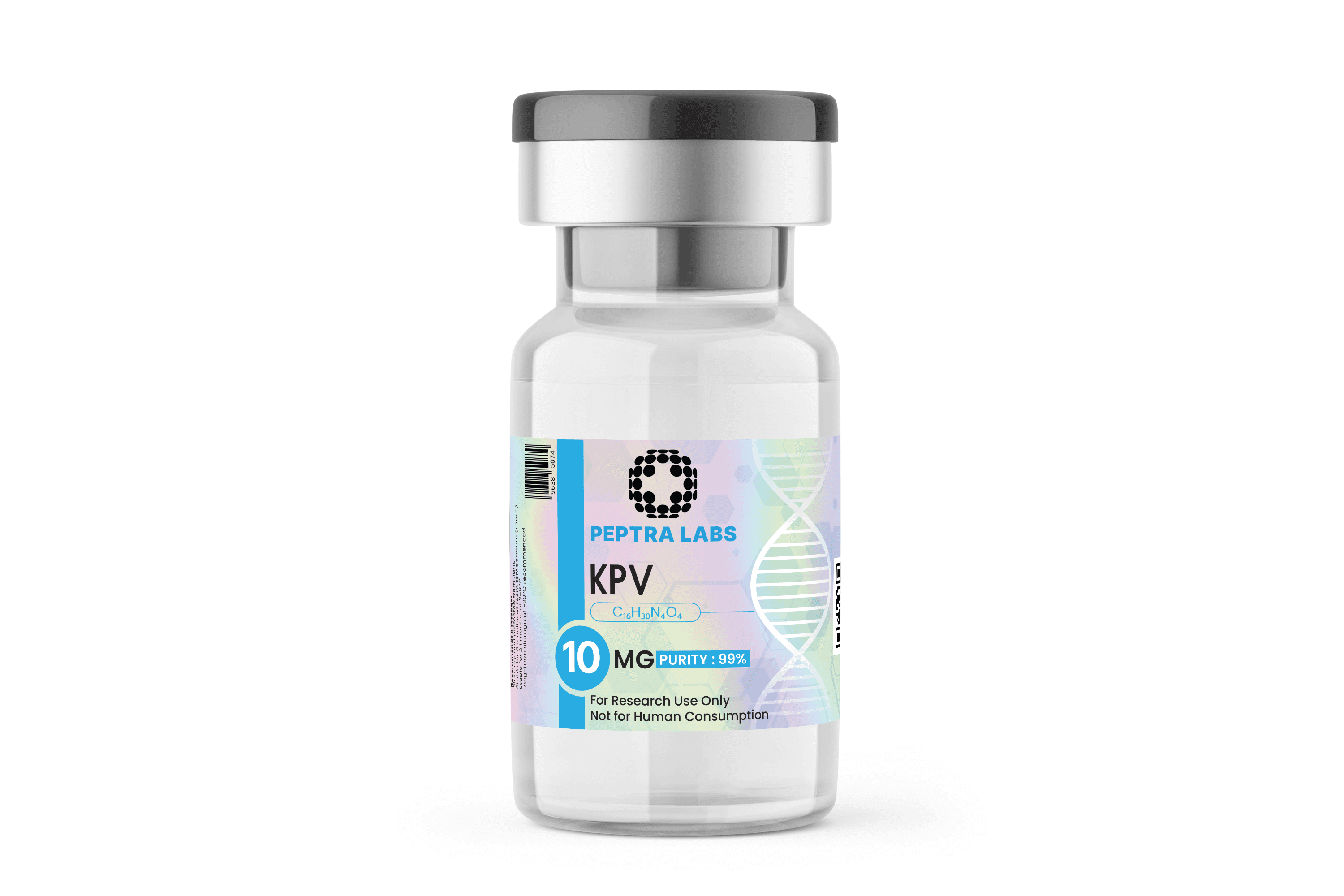
KPV
A tripeptide derived from the C-terminal region of alpha-melanocyte-stimulating hormone, recognized for its potent anti-inflammatory and antimicrobial properties with particular relevance to intestinal inflammation and wound healing. All presented information is based on scientific publications which can be found at the end of product description below.
Product Specifications
Description
All presented information is based on scientific publications which can be found at the end of product description below.
KPV (Lys-Pro-Val) is a naturally occurring tripeptide corresponding to the C-terminal fragment of alpha-melanocyte-stimulating hormone (α-MSH). Unlike its parent molecule, KPV retains significant anti-inflammatory activity without inducing pigmentary effects.
Research Highlights
1. Intestinal Inflammation
Nanomolar concentrations of KPV inhibit NF-kappaB and MAP kinase inflammatory signaling pathways. Oral administration reduced colitis severity in both DSS and TNBS-induced models.
2. Anti-Inflammatory Mechanisms
KPV preserves α-MSH anti-inflammatory properties while avoiding pigmentary side effects. Its selectivity for inflamed tissue is attributed to PepT1 upregulation during inflammatory states.
3. Wound Healing and Scar Reduction
Research demonstrated reduced leukocyte and fibroblast infiltration early after injury, with improved collagen fiber organization and reduced scar area at later timepoints.
4. Antimicrobial Activity
Structural analysis revealed antifungal properties, particularly against Cryptococcus neoformans, comparable to α-MSH.
5. Mechanism of Action
Unlike core MSH peptides, KPV effects are not mediated through melanocortin receptors, suggesting alternative pathways such as IL-1β inhibition. Multiple administration routes including transdermal delivery are viable.
References available upon request.
The product is intended for scientific research and development purposes only. Chemical substances shall not be used as a drug, medicine, active substance, medical aid, cosmetic product, a substance for production of a cosmetic product neither for human consumption that is any food or food supplement or otherwise similarly used on humans or animals. Intended only for in-vitro research, such as Receptor-ligand binding studies, Enzyme activity assays, Cell proliferation assays, Cell signaling assays, Epitope mapping, etc.
Research Use Only: The product is intended for scientific research and development purposes only. Chemical substances shall not be used as a drug, medicine, active substance, medical aid, cosmetic product, a substance for production of a cosmetic product neither for human consumption that is any food or food supplement or otherwise similarly used on humans or animals. Intended only for in-vitro research, such as Receptor-ligand binding studies, Enzyme activity assays, Cell proliferation assays, Cell signaling assays, Epitope mapping, etc.
🇪🇺 EU & UK Shipped • Free over €300 • 2-5 Business Days
Frequently asked questions
- KPV is a tripeptide consisting of Lysine-Proline-Valine (Lys-Pro-Val), corresponding to the C-terminal three residues of α-melanocyte-stimulating hormone (α-MSH). Molecular weight is approximately 342 Da. Each batch is HPLC-verified at ≥99% purity.
- KPV is studied for its anti-inflammatory properties in cell culture and animal models, with effects on NF-κB signaling, mast cell modulation, and intestinal barrier integrity in preclinical contexts. All findings are research-grade — no approved clinical use exists.
- Lyophilised at -20 °C in a sealed, desiccant-protected vial for long-term storage. Once reconstituted, follow your lab's protocols; the small molecular weight makes KPV relatively stable in solution but freeze-thaw cycles still degrade activity over time.
- KPV is used in cell culture models of inflammatory bowel disease, atopic dermatitis, and mast cell biology, plus skin wound-healing studies in rodents. The peptide is often researched alongside related α-MSH derivatives.
- No. KPV is not an approved drug in any major regulatory framework and is supplied for laboratory research only.